
Knowledge and records, kept together

Understand what you collect. Preserve what you know.

Collectaneum brings together a practical collector knowledge center and a structured registry for the items you actually own.

Learn how to identify, document, preserve and manage a collection properly, then turn that understanding into lasting records of provenance, condition, photographs, acquisition and value.

Fantasy dragon artwork representing specialist collecting genre
Collections accumulate faster than understanding.

Records fragment across spreadsheets, folders, emails and memory. Evidence becomes separated from objects. Variants disappear into notes. Important knowledge remains in the collector's head. Collectaneum is designed to keep the object, its evidence and the understanding around it connected.

Learn
The Collectaneum Knowledge Center

A structured body of practical collecting guidance covering how to research, authenticate, document, grade, preserve, value, insure, store and eventually transfer a collection responsibly.

Built as a reference, not a stream of articles
Subjects are organised around the decisions collectors actually face, with distinctions, risks, methods and collector guidance that remain useful across collecting domains.
Browse the Knowledge Center
Record
The structured collection registry

Create a long-term record of the exact items you own: their shared catalogue identity, individual characteristics, condition, photographs, provenance, acquisition and valuation history.
More than an inventory list
Separate products from variants and variants from the copy you own, while keeping photographs, documents, notes and history attached to the right record.
Access the Registry
See the registry in use
Built for serious collection records.
Select a feature to explore how Collectaneum keeps catalogue identity, individual item details, evidence and history connected.
1 of 11
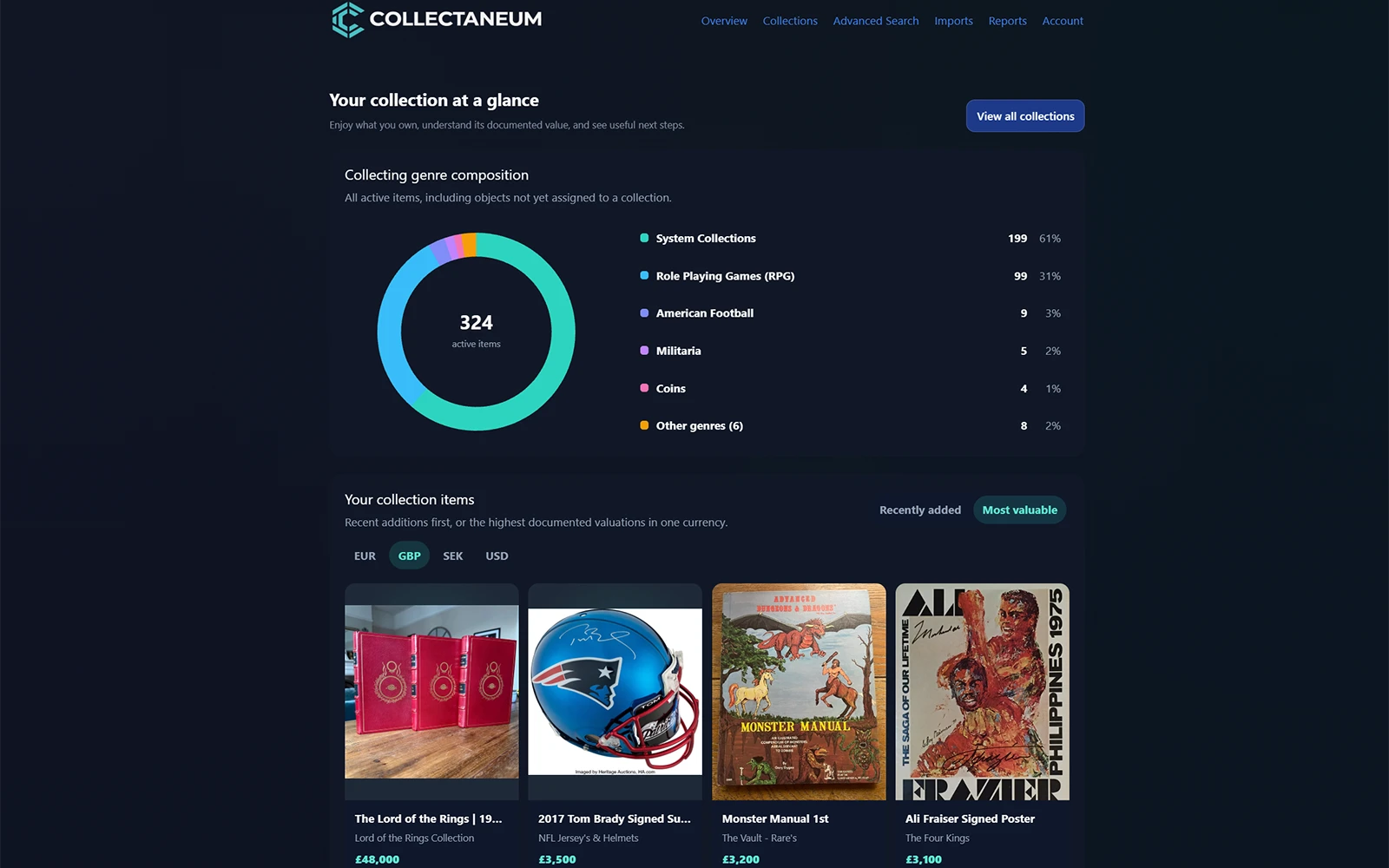
Collectaneum overview of your collections
Overview - Immediate visual picture of your collection
Overview gives you an immediate visual picture of your collection - its size, value, composition and how your items are organised. See how your collection is distributed across collecting genres and individual collections, revisit recent additions, and quickly identify your most valuable objects. It also highlights gaps in your records and suggests practical next steps, helping you continue documenting, protecting and developing your collection.
Knowledge at collecting depth
Not a blog. A working collector reference.

The Knowledge Center is organised around the full lifecycle of a collection - from identifying and documenting an item through to preservation, value, risk, sale and succession.

It exists to make good collecting practice explicit, usable and transferable rather than leaving it scattered across specialist conversations and personal experience.

Explore all knowledge subjects →
DocumentationAuthenticationResearchGradingProvenancePreservationRestorationPhotographyStorageValuationInsuranceSellingEstate planningSecurity
Built around collecting principles, not a single hobby.

The same disciplined approach can support role-playing games, militaria, sports, toys & games, books, coins, comics, watches, natural history and other specialist collections.
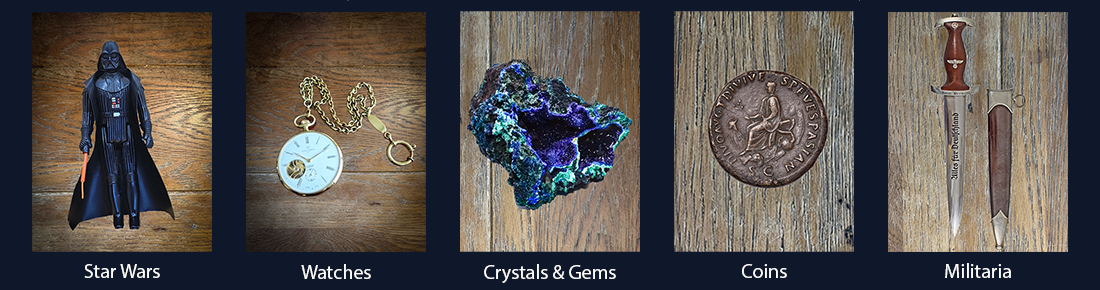
Examples of different collecting domains supported by Collectaneum
Created by collectors who wanted more than a spreadsheet and less than a marketplace.
A collection - and its meaning - that stays understandable.
Whether you are managing a growing collection, preparing for insurance, sharing records with another collector, planning a future sale or ensuring somebody else can understand what you built, the goal is the same: preserve not only the objects, but the context around them.
Start with knowledge. Build the record over time.

Good collection records do not need to be completed in a single sitting. You might begin with a title, a photograph and a few identifying details, then add further information as the object is researched, authenticated, valued or prepared for long-term storage.

The Knowledge Center provides practical guidance across the main responsibilities of collecting, including documentation, authentication, research, grading, provenance, preservation, restoration, photography, storage, valuation, insurance, selling, estate planning and security.

The Registry gives that knowledge somewhere practical to go. You can apply what you learn to the objects you own by recording evidence, adding photographs, retaining documents, tracking acquisitions and valuations, and preserving the distinctions that make one example different from another.

You can explore the Knowledge Center freely. When you are ready to organise your own collection, the Registry allows you to begin simply and develop more complete records over time.